

Living Climate Futures
Symposium
2026
April 23-25, 2026,
MIT Campus
Panels & Films | Field Trips
Join us for our second symposium! The symposium brings together community environmental organizations with MIT researchers and students to explore how climate change – and responses to it – are playing out in locations from New England to the Pacific Northwest to Mongolia. Topics include localized health and ecological effects, food systems, energy transitions, and how to further collaborative and interdisciplinary climate research.
Featuring speakers from: GreenRoots, Haley House, Se’Si’Le, Children of the Setting Sun, Taproot Earth, The Center for Coalfield Justice, The Food Project, Stone Living Lab, The Urban Farming Institute, UMass Extension, The Collaboratory for Indigenous Data Governance, the National University of Mongolia, and more.
Please note that registration for panels and film screenings is not needed, though welcomed, for headcount purposes. Registration is however required for the op-ed workshop and the field trips due to space limitations.
Register for panels, film screenings, and workshops HERE.
Register for field trips HERE.
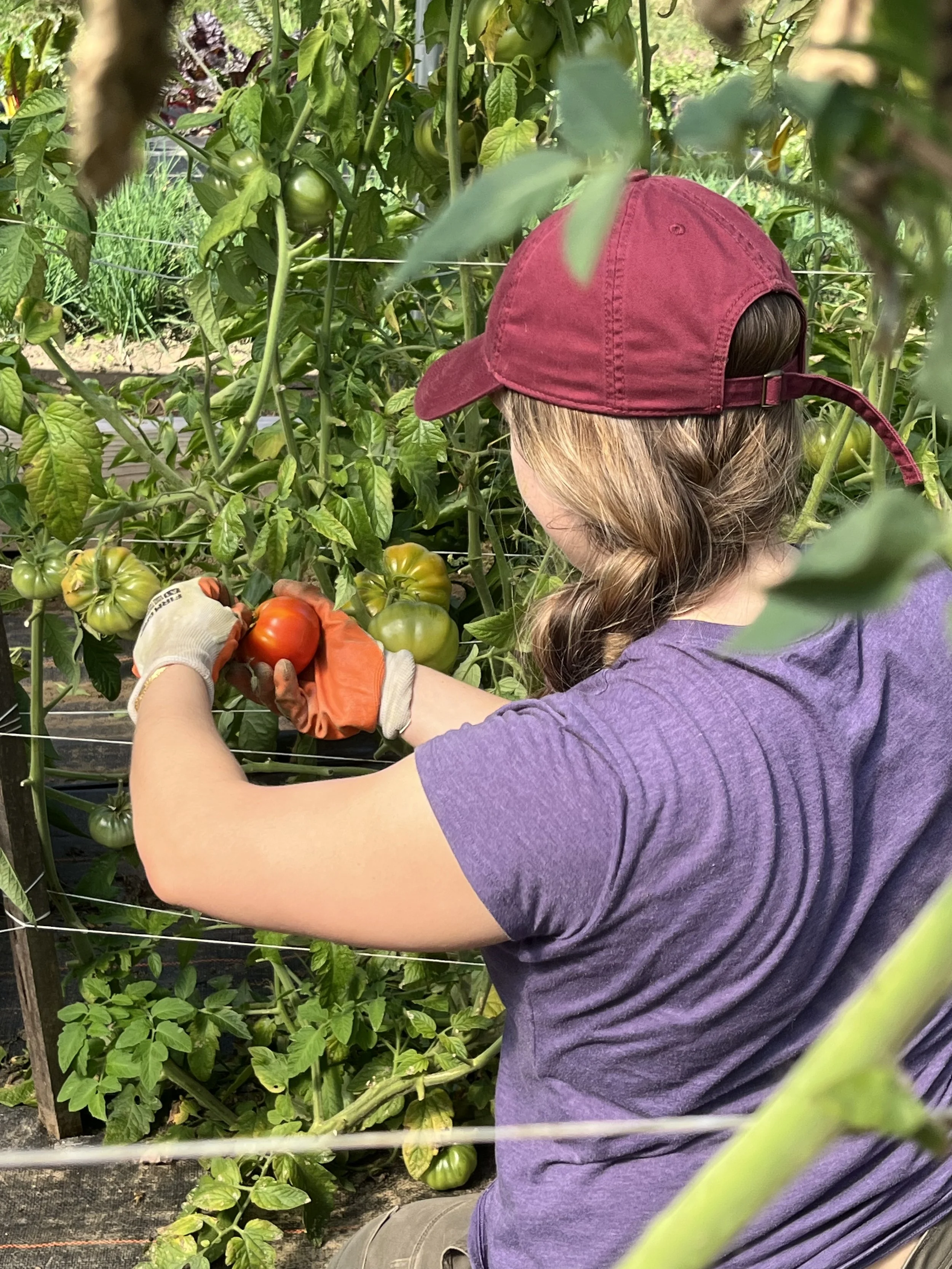
Volunteer farming as part of the MIT-Hannan Healthy Foods pilot, Fall 2025. Photo credit: Heather Paxson
Thursday April 23
5:00-6:15 pm Writing to Inspire Change: Strategies for Public Engagement
Op-ed workshop led by public anthropologist Ieva Jusionyte, Brown University; Moderator: Amy Moran-Thomas. (Dinner served)
Location: Room E51-095
6:30-8:30 pm Film screening and Q&A, If Only I Could Hibernate
Fiction film about youth in Mongolia facing environmental and economic obstacles; Cannes Film Festival 2023. Q&A with Temuulen Enkhbat and Manduhai Buyandelger.
Location: 45-230
Friday April 24
9:00-9:30 am Welcome
Heather Paxson, Associate Dean and Co-Head of MITHIC; Chris Walley & Amah Edoh
Location: MIT Samberg Conference Center, 7th Floor, Salon T
9:30-10:45 am Taking Stock in Contentious Times
Discussion with participants from the 2022 Living Climate Futures symposium about how changing political times are affecting community-oriented environmental organizations.
Moderators: Heather Paxson and Briana Meier.
Speakers: Walt Bonham (formerly Richland Gro-Op); Bianca Bowman (formerly GreenRoots); Trinity Colón (formerly Student Voice Committee GWHS; SE Chicago Environmental Task Force); Alejandra Cruz (SE Chicago Environmental Task Force/Ford Environmental Center); Jade Mazon (SE Chicago Rebel Belles and South Deering Farmers Market); Kurt Russo (Se’Si’Le).
Location: MIT Samberg Conference Center, 7th Floor, Salon T
11:00 am - 12:30 pm Data Centers, Energy Concerns, and Community Health
Moderator: Amy Moran-Thomas.
Speakers: Jason Capello, Center for Coalfield Justice; Nicholas Hood, Center for Coalfield Justice; Sarah Sweeney, Center for Coalfield Justice; Jonathan Buonocore, Department of Environmental Health, Boston University School of Public Health; Mary Willis, Department of Epidemiology, Boston University School of Public Health; Francesca Dominici, Harvard Data Science Initiative.
Location: MIT Samberg Conference Center, 7th Floor, Salon T
12:30 - 1:45 pm On-Site Lunch
Including a chance to play an educational game about developing Community Benefits Agreements! Conceived by Sara Wylie and facilitated by Amy Moran-Thomas and Anjuli Jain Figueroa.
Location: MIT Samberg Conference Center, 7th Floor, Salon T
2:00 - 3:30 pm Advancing Urban Agriculture in a Changing Climate: Voices from Greater Boston’s Growing Spaces
Moderator: Kate Brown.
Speakers: Olivia Golden, Urban Agriculture Educator, UMass Extension; Cecilia Del Cid, Director of Food Justice & Youth Programs, GreenRoots; Sabrina Pilet-Jones, Urban Farm Manager, Haley House; Matthew Ellison, Urban Farming Institute
Location: E51-325
3:45 - 5:15 pm The Work of Repair: Global Perspectives and Methodologies
Moderator: Amy Moran Thomas.
Speakers: Veronica Coptis, Eliane Lakam, Sophia Andrews Maison (Taproot Earth)
Location: E51-325
5:15 - 6:15 pm On-Site Dinner from Mei Mei Dumplings
6:30 - 8:00 pm Climate Change as Place-Based Phenomena: Perspectives on Mongolian grasslands pastoralism; Diné based solutions and healing for the Navajo Nation and greater Southwest; creating nature-based infrastructure and climate resiliency in Boston Harbor; and post-industrial wetland environments in Chicago
Moderators: Manduhai Buyandelger, Alvin Harvey, and Chris Walley.
Speakers: Munkh-Erdene Gantulga, National University of Mongolia; Byambabaatar Ichinkhorloo, National University of Mongolia; Elisa Guerrero, Stone Living Lab + Sustainable Solutions Lab, UMass Boston; Nekai Eversole, Wildlife Biologist and Program Lead with Climate Change Program - Navajo Nation Department of Fish and Wildlife; Breanna Lameman, University of Arizona Indigenous Data Sovereignty Doctoral Scholar, Collaboratory for Data Governance, and Graduate Research Associate.
Location: E51-325
Saturday April 25
9:00 am - 1:00 pm Field trips:
The Food Project (Urban Agriculture, Roxbury)
A chance to learn about urban agriculture and do some volunteer farm labor (no experience needed!). Organized by Susy Jones, Chris Rabe, Heather Paxson, and Kate Brown.
Stone Living Lab Tour (Coastal Resilience, Boston Harbor)
Visit a living seawall, nature-based flood protection infrastructures, and a community-based flood sensor project as Boston tries to address rising seawater levels. Organized by Michaela Thompson, Stefan Helmreich, and Chris Walley.
Shaping Campus Decarbonization (Foundations and road ahead)
2:00 - 3:30 pm Xa xah Xechnging: A Sacred Obligation in a Time of Climate Chaos
Perspectives from Se’Si’Le & Children of the Setting Sun, Indigenous-led environmental organizations from the Pacific Northwest, US.
Moderators: Bettina Stoetzer and Briana Meier.
Speakers: Kurt Russo & Rueben George, Se’Si’Le; Raynell Morris, Children of the Setting Sun
Location: E51-325
3:45 - 5:15 pm Experiential Learning, “Anthro-Engineering,” and Learning to Do Community-Oriented Research
Conversations with community organizations, students, and faculty.
Moderators: Iselle Barrios and Laura Frye-Levine.
Location: E51-325
5:15-6:30 pm Wrap-up Conversation and On-Site Dinner
Facilitated by Amah Edoh and Laura Frye-Levine.
Location: E51-325
7:00 - 8:30 pm[LOCATION CHANGE] Film screening Climate Voices and Q&A with dir. Leslie Jonas, MLK Jr. Visiting Scholar/Elder Eel Clan member of the Mashpee Wampanoag Tribe.
Perspectives from Native experts and climate scientists working on the frontlines. Q&A moderated by Janelle Knox-Hayes.
Location: E51-325
SYMPOSIUM PROGRAM
About us:
Living Climate Futures complements MIT’s other climate efforts by focusing on everyday life and long-term partnerships with community groups. Our work highlights the importance of getting community partnerships “right” by developing relationships of trust and implementing strong codes for ethical research conduct. Through the suite of experiential learning classes we are developing, we are training the next generation of researchers, modeling for MIT graduate and undergraduate students how to engage in ethical, mutually beneficial partnerships with community actors and across STEM and SHASS disciplines.
Learn more about our activities here.
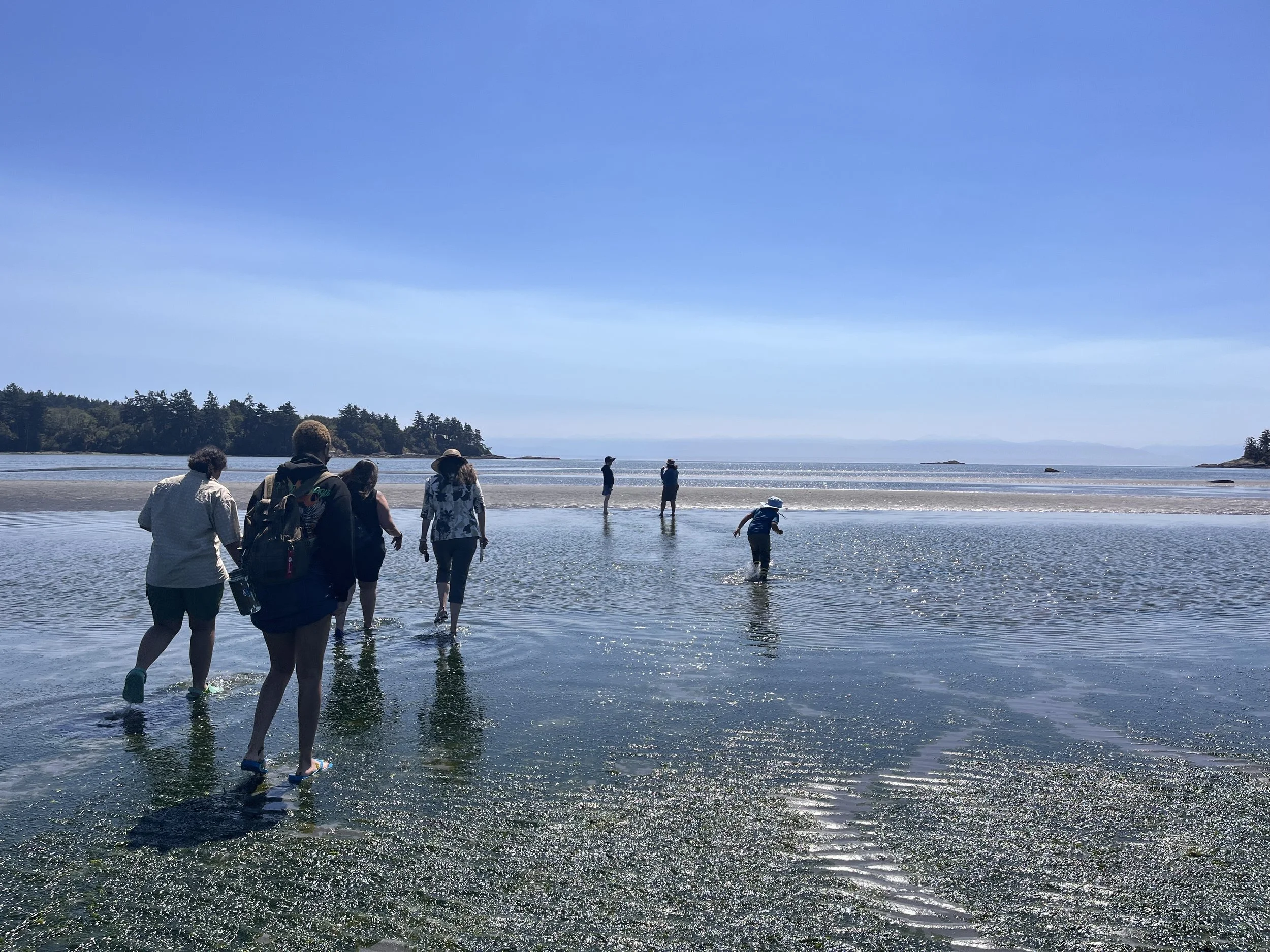
MIT students and community partners from Friends of the San Juans during a research trip to an eel grass meadow (tidal zone) on San Juan Island, WA.
MITHIC-funded "From Lab to Land" Summer Field School for Climate Justice in the Pacific Northwest, organized by Bettina Stoetzer and Briana Meier, in partnership with Washington-based Indigenous-led environmental justice organization, Se'Si'Le.
Photo credit: Bettina Stoetzer